
Establishment in Singapore
Singapore benefits from a large and wide array of established service providers, global and local, supporting the establishment and ongoing servicing of management companies and funds.


Licensing Regime
The carrying on of investment management and/or investment advisory activities in Singapore is an activity that is regulated under the Securities and Futures Act 2001 of Singapore.
Any person carrying on a regulated activity would need to be licenced by the Monetary Authority of Singapore, unless an applicable exemption from this requirement can be relied upon.
Managers managing client monies, whether through pooled investment schemes (known locally as collective investment schemes), or though separately managed accounts, will generally require approval to do so prior to any commencement of an investment management business.
Managers may rely on self-invoking exemptions where the asset class being managed is “immovable assets”. This exemption has been invoked by managers managing real estate and infrastructure funds.
An exemption is also available where the assets are managed on behalf of “related corporations”, i.e. members of the same group of companies. This exemption has been most commonly utilised by single family offices.
Where an activity requires licensing and registrations, various quantitative and qualitative criteria apply.
Applications for such approvals requires careful preparation of prescribed forms, discussions on proposed business activities, and disclosure of particulars of key personnel and shareholders.

Guidelines on Licensing, Registration and Conduct of Business for Licensed Fund Management Companies
FAQs on the Licensing and Registration of Fund Management
The FAQs provides guidance on the requirements and procedures to apply to be a fund management company, and to appoint representatives to carry out fund management activities.
Compliance Toolkit for Approvals, Notifications and Other Regulatory Submissions to MAS for Fund Managers
The MAS provides a helpful Compliance Toolkit which aims to guide and facilitate licenced fund management companies and venture capital fund managers’ compliance with the various MAS approval and reporting requirements and timelines.
Fund Management Licences and Registrations
If your company wishes to conduct regulated fund management activities under the Securities and Futures Act 2001 (SFA) it must hold a capital markets services (CMS) licence to operate as a licenced fund management company (LFMC).
Managers who solely manage venture capital funds may also apply to be an LFMC that operates under the simplified venture capital fund manager (VCFM) regime.
Individuals performing key functions in a fund management company, such as portfolio construction and allocation, research and advisory, business development and marketing or client servicing are required to be appointed by the fund management company as representatives.
You can find out more about fund management activity and differences between an LFMC and VCFM here.
There are essentially three categories of licences/registrations
A Capital Markets Services Licenses – Accredited and Institutional Investors
Accredited and Institutional Investors
Managers having assets under management of more than S$250m must hold a capital markets services licence.
Licensed Accredited / Institutional Fund Management Companies ["Licensed AI FMCs"]
B Capital Markets Services Licence – Retail Clients
Retail Clients
More onerous regulatory requirements apply, particularly in the case of managers seeking to manage retail monies.
Licensed Retail Fund Management Companies ["Licensed Retail FMCs"]
C Capital Markets Services Licence – Venture Capital
Venture Capital
Managers who solely manage venture capital funds may apply to be an LFMC that operates under the simplified venture capital fund manager regime. This category of licence has reduced regulatory requirements due to the nature of the assets held, and the type of clients typically investing in these assets.
Venture Capital Fund Managers [“VCFMs”]
* Base capital is the paid-up capital plus audited profits less losses (including interim intra-year losses) and any declared dividends. For Licensed A/l FMCs and Licensed Retail FMCs, additional capital requirements apply.
* Representatives must spend substantially all their business time in front office activity.
Note that there are significant ongoing compliance and regulatory requirements including regulations relating to AML, risk management, personnel, outsourcing, ESG, periodic filings, customer assets and various conduct of business requirements. You should seek professional advice to better understand these requirements. These have not been included in the tables above.
For further detailed information, please click on the below link to the MAS Guidelines on Licensing, Registration and Conduct of Business For Fund Management Companies.
Establishing a Fund Management Company
Fund management companies in Singapore are usually established as a Singapore private limited company. To incorporate a Singapore private limited company, an application must be submitted through the Accounting & Corporate Regulatory Authority (ACRA) Bizfile+ online portal. ACRA is the national regulator of business registration of companies in Singapore.

Additional information on Singapore companies:
Minimum of one local resident director and one subscriber share required at incorporation.
Under Singapore company law, there is a minimum paid up share capital of S$1. Note that Singapore fund management companies regulated by the Monetary Authority of Singapore are subject to minimum capital requirements when operational and will have to increase their paid up capital to meet these requirements.
Different share classes can be created, although fund management companies typically issue one class of ordinary shares entitled to voting and economic rights.
There is no limitation on foreign ownership and a Singapore private limited company can be wholly owned by foreign persons.
Whilst there are exemptions from having to prepare audited financial statements for smaller companies, regulated fund managers are required to prepare and file their audited financial statements with both ACRA and the MAS. For such purpose, external auditors must be appointed.
A company secretary must be appointed within 6 months from the date of incorporation.
For more information on establishing of a Singapore private limited company, please visit:
https://www.acra.gov.sg/how-to-guides/setting-up-a-local-company
Singapore Work Visas

Employment Pass, EntrePass, Personalised Employment Pass, and Overseas Networks and Expertise Pass
Under Singapore law, any foreign national who intends to work in Singapore must hold a valid work visa. Generally, the work visas that may be applicable to foreign nationals who are investment professionals or principals of a fund management company or fund entity are as follows:
(i)Employment Pass (“EP”) – The EP is a work visa suitable for foreign nationals who are skilled professionals and executives. These foreign nationals must: (a) be paid a fixed salary of an amount more than S$5,000; and (b) meet certain educational and relevant work experience requirements. An EP is valid for 1 to 2 years. Higher salary requirements will be required for more experienced candidates. Note, the minimum salary requirements are from $6,200 for financial services (the minimum qualifying salary for new applications from 1 Jan 2027, and for renewal of passes expiring from 1 Jan 2028 will be $6,600, and up to $12,700 at age 45 and above)
(ii) EntrePass – The EntrePass is a work visa suitable for foreign nationals who: (a) started or intend to start and operate a business in Singapore that is venture-backed or possesses innovative technologies; and (b) meet certain relevant experience, achievement or funding requirements. A EntrePass is valid for 1 year and may be renewed for a further period of 2 years.
(iii) Personalised Employment Pass (PEP) – The PEP is a work visa suitable for foreign nationals who: "(a) earn fixed monthly salary overseas of S$22,500 or more, or (b) are existing Employment Pass holders earning at least S$12,000. Unlike the Employment Pass, it is not tied to an employer and is valid for up to 3 years. It can only be issued once.
(iv) Overseas Networks and Expertise Pass (ONEPASS) – The ONEPASS is a 5 year independent work visa which allows pass holders to engage in multiple business activities including founding, operating, and working for companies in Singapore. Eligible candidates must earn a fixed monthly salary of at least S$30,000, or its equivalent in foreign currency, or will earn a fixed monthly salary of at least S$30,000 under their prospective employer based in Singapore.
For more information on the available work visas, please visit: https://www.mom.gov.sg/passes-and-permits

Dependent Pass and Long Term Visit Pass
Further, any foreign national who intends to relocate a family member to Singapore will be required to apply for a Dependent Pass (“DP”) or Long Term Visit Pass (“LTVP”) for the family member. A DP or LTVP is a relocation visa that is issued to family members of a valid work visa holder. The DP or LTVP will continue to be valid as long as the valid work visa holder continues to work in Singapore and will allow the DP or LTVP holder to enter and leave Singapore freely without having to apply for separate Singapore entry visas. The DP is applicable to spouses and children of the valid work visa holder, while the LTVP is applicable to the parents, common-law spouses, step-children or handicapped children of the valid work visa holder.
All DP holders who wish to be employed will need to apply for an applicable work pass, such as Employment Pass, S Pass or Work Permit, instead of a Letter of Consent (LOC).
For more information on the DP and LTVP, please visit: https://www.mom.gov.sg/passes-and-permits

Global Investor Programme
In addition to the valid work visas that a foreign national may apply for, the Economic Development Board and the Ministry of Manpower jointly launched a Global Investor Programme (“GIP”) that allows foreign nationals to acquire a permanent residency (“PR”) status in Singapore.
These have been used by larger single family offices seeking PR status for family members.
These family members may, but need not necessarily be involved in the management of the family assets.
For more information on the GIP, please visit:
https://www.edb.gov.sg/en/how-we-help/global-investor-programme.html
Taxation in Singapore
Singapore adopts a quasi-territorial basis of taxation, wherein Singapore sourced income is taxable as it arises and foreign sourced income is taxable when received in Singapore, unless a specific exemption is applicable.
Singapore does not impose tax on capital gains. However, gains from disposal of investments may be construed to be income in nature and subject to Singapore income tax if they arise from or relate to a trade or business carried on in Singapore.
Skills Development Initiatives
Singapore places professional development and training at its core in building the ecosystem and community supporting the asset management industry.
MAS works closely with tripartite partners to build a skilled and adaptable Singapore workforce in finance. Find out how the Talent and Leaders in Finance Programme helps develop early career and mid-career professionals, as well as specialists and leaders for the financial sector.
"The Talent and Leaders in Finance Programme will help nurture more Singaporean specialists and leaders in Finance and ensure that Singaporeans are able to take up good jobs that the financial services sector will continue to generate in the years to come."
- Lawrence Wong, Deputy Prime Minister, and Deputy Chairman of the Monetary Authority of Singapore
Financial institutions can get support for hiring and training (1.7 MB) as well as support for workforce transformation, while finance professionals can tap on funding for skill and career development (655.8 KB), offered by various government agencies.
MAS supports skills training and to develop more finance specialists and leaders in the Singapore workforce.
- Build workforce competencies in growth areas and provide training support for finance professionals at different stages of their careers
- Develop specialist talent in areas such as sustainability and technology
- Develop leaders through opportunities to acquire expertise, international exposure, and networks to help them succeed in their leadership roles
You can find out more about the MAS and the IBF Skills Development Initiatives here.
MAS provides support to finance professionals at different stages of their careers
Early Career
MAS provides support to financial institutions to enhance the job readiness of fresh graduates and to develop new talent pools for the financial sector.
Mid-Career
MAS provides support to deepen competencies, reskill professionals to enable them to take on new or expanded roles and nurture specialist talent in technology and sustainability. Financial institutions are also encouraged to invest in their employees and in new talent, especially in growth areas like sustainability and technology.
Leaders
MAS supports financial institutions in developing and nurturing Singaporeans to assume leadership roles in the financial sector.
Lifestyle

Best place in Asia
A number of reputable indexes rate Singapore as the best place to live in Asia. It is the best location for quality of life, public transportation, healthcare and safety – not to mention the extraordinary cuisine and both strategic and convenient location for travel.

Quality of Life
The 2024 Mercer Quality of Living Rankings identify Singapore as having the best Quality of Life in Asia.

Healthcare
Singapore ranks 1st in the world for the Health pillar in the Legatum Prosperity Index. This top ranking reflects Singapore’s exceptional health outcomes, robust health systems, low risk factors, and high-quality, accessible care for its population.

Green Living
Singapore is among the greenest cities in the world and according to the Green Building Information Gateway, there are 1,058 green buildings with Singapore expressing its goal to have 80% of its buildings green by 2030.

Safety
Singapore was ranked 1st in Asia and 6th globally in the 2025 Global Peace Index and was named the safest country in the world in the 2024 Gallup survey.
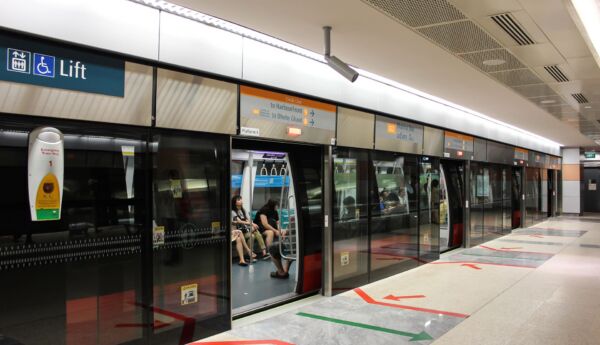
Public Transportation
In the 2024 edition of the Urban Mobility City Ranking, Singapore claimed the top spot for public transit, earning recognition as having the best public transport system in the world. New bus and train lines, as well as covered walkways, are constantly in development to make the city more accessible.

Expat Living
Singapore’s cultural synthesis of East and West, award-winning airport, and booming F&B industry boasting cuisines from around the world makes it one if the best cities for expats.